Swift Temps analysis for the April 2026 Employment Changes

April 2026 Employment Changes: What Smart Employers Are Doing Now

April has arrived, and with it comes a set of employment law changes that will quietly, but significantly, reshape how businesses recruit, budget, and manage their workforce. On paper, these changes are straightforward: pay rates increase, sick pay rules expand, and more workers gain access to statutory rights from day one, but in practice, the

April 2026 Employment Changes: What Smart Employers Are Doing Now Read More »
What the Latest ONS Business Survey Reveals About Hiring Pressures in 2026

What the Latest ONS Business Survey Reveals About UK Hiring Pressures in 2026

The ONS Business Insights and Conditions Survey, released on 5th March 2026, provides a snapshot of the pressures UK employers face around staffing costs, recruitment, and workforce availability. While some labour market indicators suggest conditions have eased slightly compared with late 2025, businesses are still navigating a complex mix of rising employment costs and persistent

What the Latest ONS Business Survey Reveals About UK Hiring Pressures in 2026 Read More »

Spring Budget Statement 2026

Spring Budget 2026: What the Update Means for UK Businesses and the Recruitment Industry

Today, (3rd March 2026), Chancellor Rachel Reeves delivered the UK government’s Spring Statement, an update on the economy backed by forecasts from the Office for Budget Responsibility. Unlike a full Budget, this statement did not introduce major tax or spending changes. Instead, it offered a revised outlook on growth, unemployment, and borrowing. For hiring managers,

Spring Budget 2026: What the Update Means for UK Businesses and the Recruitment Industry Read More »

What to Look for When Choosing a Recruitment Agency Top Tips for Getting it Right First Time

What to Look for When Choosing a Recruitment Agency

Top Tips for Getting it Right First Time When it comes to hiring, getting the right recruitment partner can be the difference between seamless growth and staffing headaches. Whether you’re a small business navigating talent acquisition for the first time or a larger organisation reassessing suppliers, finding the right recruitment agency is critical to your

What to Look for When Choosing a Recruitment Agency Read More »

Rising Youth Unemployment in the UK – Why It Matters and How We Can Help

Rising Youth Unemployment in the UK – Why It Matters

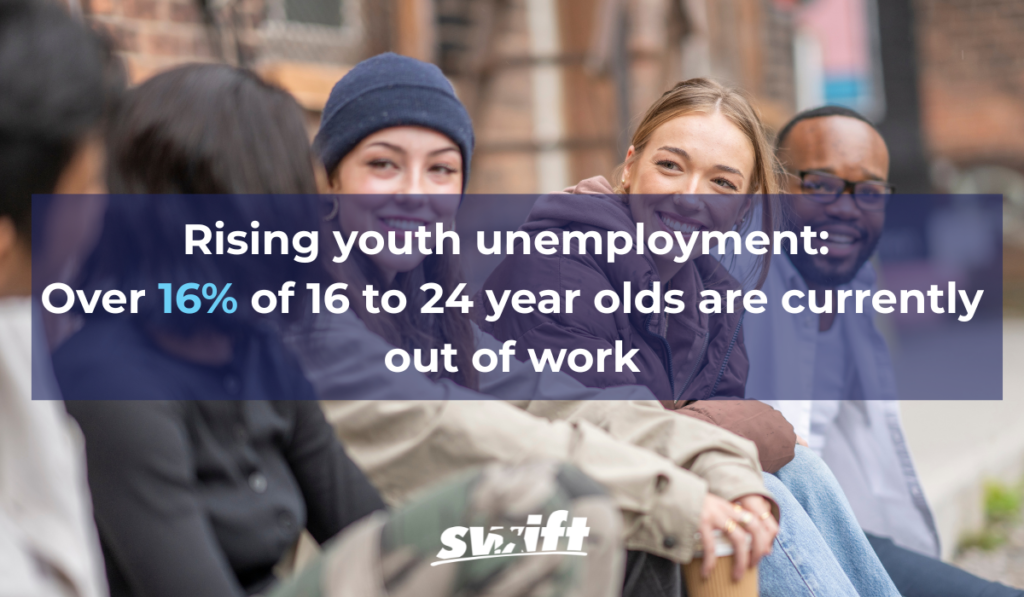
Youth unemployment in the UK is rising, with 16–24-year-olds facing increasing difficulty securing work. Recent analysis from the Financial Times (2026) highlights that policy changes, economic pressures, and a tightening job market are disproportionately affecting young people. While this trend has immediate consequences for those seeking their first roles, the wider implications touch businesses, communities,

Rising Youth Unemployment in the UK – Why It Matters Read More »

5th Feb - ONS Swift Temps Analysis

Latest ONS Business Insights February 2026 – Full Article

What the Latest Data Really Means for UK Employers As we move further into 2026, the UK business landscape is best described as steady, pressured, and adaptive. The latest Office for National Statistics (ONS) Business Insights and Impact on the UK Economy survey offers a timely snapshot of how organisations are responding to ongoing trade,

Latest ONS Business Insights February 2026 – Full Article Read More »

January 2026 UK Recruitment & Labour Market Insight – Full Article

What It Means for Employers and Candidates As we move into February, it’s worth taking stock of what the first official UK labour market statistics of 2026 tell us, and not just at headline value. For employers planning resourcing strategies and candidates considering their next move, January’s data offers nuance: stability where it matters and

January 2026 UK Recruitment & Labour Market Insight – Full Article Read More »

Why Temporary Staff Leave and What Employers Can Do Differently in 2026 – Full Article

High turnover within temporary workforces is often treated as unavoidable, particularly in high-volume or operational environments. In reality, UK workforce research consistently shows that people are far more likely to leave roles because of how they are managed and supported, rather than because of the work itself. Studies from the CIPD have repeatedly highlighted that

Why Temporary Staff Leave and What Employers Can Do Differently in 2026 – Full Article Read More »

Scroll to Top